

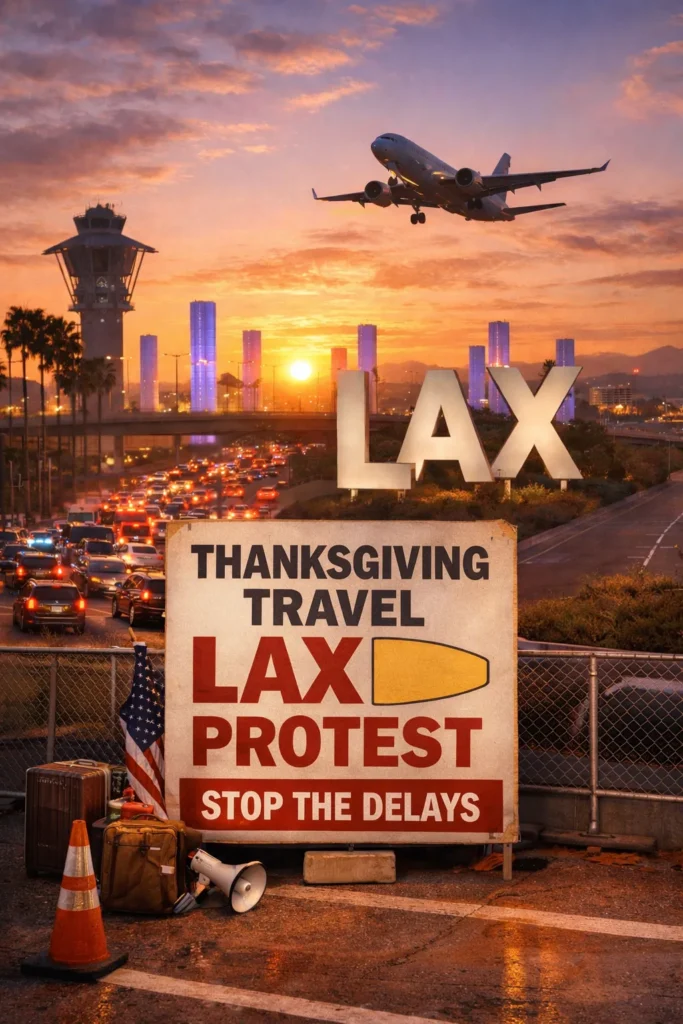
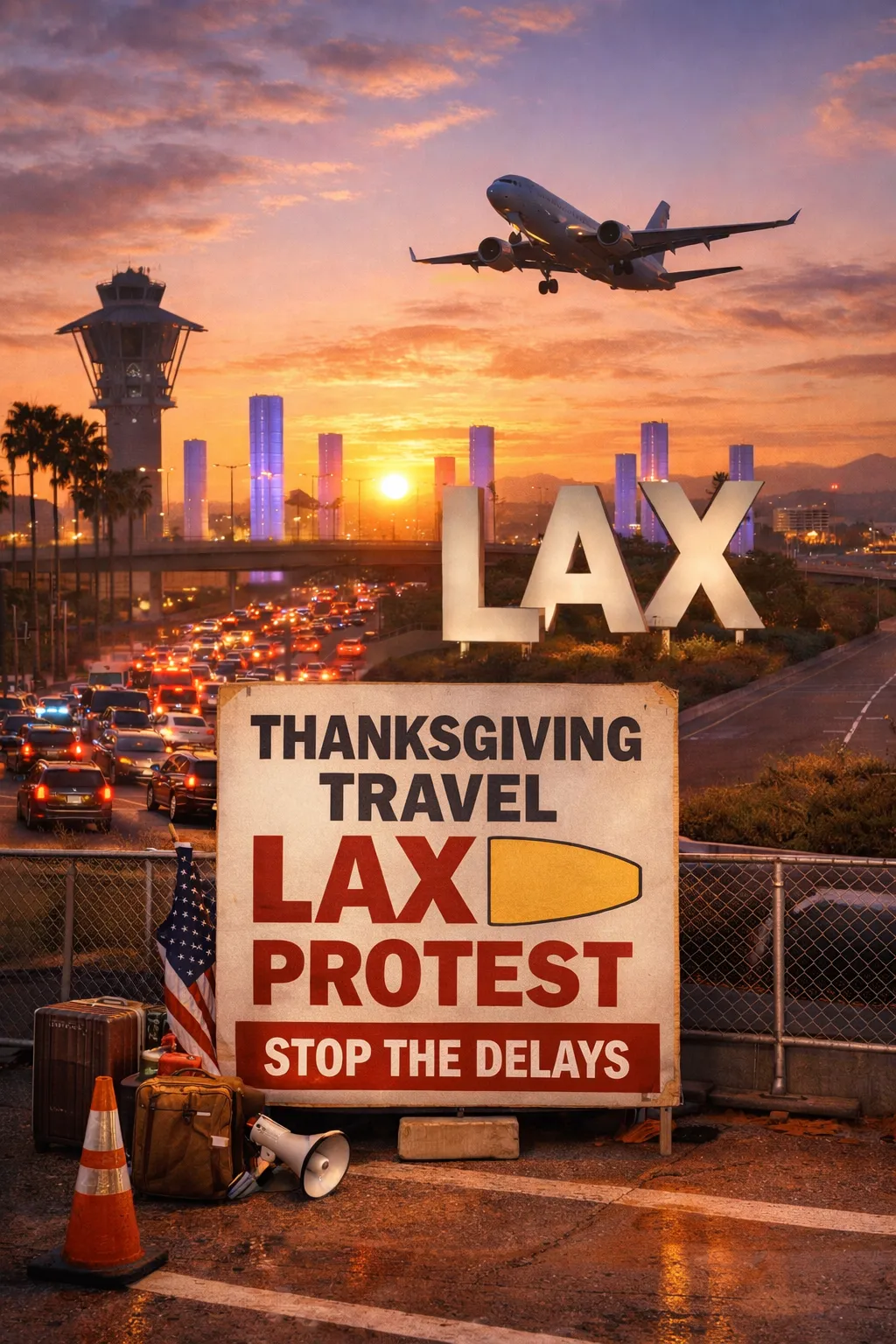
The Thanksgiving travel LAX protest unfolded during the peak holiday rush in late November outside Los Angeles International Airport. Hundreds of airline catering workers marched near airport entrances and blocked sections of Century Boulevard, one of the main access roads to the terminals.
Drivers sat in gridlock. Some passengers stepped out of rideshares and walked toward terminals with luggage in hand. Police officers redirected traffic while chants echoed along the roadway.
This protest did not erupt randomly. Workers said unsafe conditions and stalled labor talks pushed them to act during one of the busiest travel weeks of the year.
Who Organized the Demonstration
Catering employees working for Flying Food Group led the protest. Many of them belong to UNITE HERE Local 11, a labor union that represents hospitality and airport workers across Southern California.
Union leaders coordinated the march and publicly addressed media outlets on-site. They argued that airport contractors must improve safety standards and negotiate fair agreements.
Groups involved:
- Airline catering workers at LAX
- Union organizers from UNITE HERE Local 11
- Local law enforcement
- Holiday travelers affected by road closures
Why Workers Chose Thanksgiving Week
Thanksgiving week ranks among the heaviest travel periods in the United States. Airlines schedule thousands of additional flights. Families gather. Airports run at near capacity.
Workers selected this timeframe to amplify visibility. Heavy traffic increased public awareness. A protest during a slow season would not have drawn the same reaction.
Holiday timing created:
- Long vehicle queues outside terminals
- Heightened media presence
- Immediate reaction from airport authorities
- Public debate on labor rights versus travel disruption
Core Complaints Raised by Workers
Union representatives outlined workplace grievances tied to safety and pay.
Main concerns:
- Reports of malfunctioning fire alarms
- Flooded or slippery kitchen areas
- Equipment that workers said lacked proper maintenance
- Allegations of delayed responses to internal complaints
- Calls for higher wages
Workers claimed that management failed to resolve hazards quickly. They demanded accountability from airport leadership and city officials in Los Angeles.
What Happened on the Ground
Demonstrators gathered outside airport property and marched toward Century Boulevard. They blocked traffic lanes for several hours. Cars, buses, and rideshare vehicles slowed to a crawl.
Some travelers abandoned vehicles and walked more than a mile to reach terminals. Airport police eventually pushed protesters back to sidewalks and reopened lanes.
Authorities did not report major injuries. Officers maintained crowd control without mass arrests.
Sequence of Events
| Date | Event |
| Late November 2025 (pre-Thanksgiving) | Union announced protest plans |
| November 25, 2025 | Workers gathered near LAX entrances |
| November 26, 2025 (afternoon) | Century Boulevard traffic blocked |
| November 26, 2025 (evening) | Police cleared roadway and restored traffic flow |
This timeline shows how quickly the situation escalated and then stabilized within the same day.
Immediate Effects on Travelers
The protest disrupted surface traffic rather than airport operations inside terminals. Flights largely departed on schedule, but many passengers faced delays reaching check-in counters.
Travelers experienced:
- Missed check-in windows
- Rushed security lines
- Extended rideshare charges
- Stress linked to uncertain arrival times
Airport officials advised passengers to arrive earlier than usual. Social media posts showed images of long walking lines stretching toward terminal entrances.
Airline Response
Airlines operating at LAX monitored the situation and issued general travel advisories. Most carriers encouraged customers to:
- Track flight status via apps
- Allow extra driving time
- Contact customer service for rebooking options
Catering operations did not halt entirely, though workers argued that staffing shortages could worsen unless management addressed their demands.
Labor Context at Major Airports
Airports rely on contractors for catering, cleaning, fueling, and baggage services. These workers do not work directly for airlines in many cases. Contract negotiations sometimes create tension during peak seasons.
Holiday protests at transportation hubs carry higher visibility because:
- Passenger volume surges
- Media coverage increases
- Delays spread quickly through social platforms
The Thanksgiving Travel LAX Protest highlighted how airport labor disputes intersect with public travel.
Public Reaction Across Media
Public opinion split sharply.
Some travelers expressed frustration about disrupted plans. Families feared missing reunions and prepaid reservations. Others voiced support for workers, stating that safety and fair pay deserve attention even during holidays.
Online commentary showed two dominant viewpoints:
Frustrated travelers said:
- The protest location caused unnecessary hardship
- Holiday gatherings faced risk
- Workers should have chosen another time
Supporters said:
- Labor rights deserve visibility
- Safety concerns require urgency
- Peaceful protest remains a protected right
This divide shaped the broader conversation surrounding the event.
Statements From Union Leaders
Union representatives declared that workers sought safer kitchens and stronger contracts. They described conditions they considered hazardous and urged airport officials to intervene.
Their messaging focused on:
- Workplace dignity
- Fair wages
- Transparent safety inspections
Union leaders stressed that they would pursue additional action if negotiations stalled.
Response From Authorities
Airport police restored order by clearing roadways and directing demonstrators to designated areas. Officials emphasized that travelers could still access terminals, though congestion remained heavy during peak hours.
City officials did not announce immediate policy changes in the days following the protest. Negotiations between labor representatives and management remained private.
Broader Economic Impact
Thanksgiving travel generates billions of dollars for airlines, hotels, and tourism businesses. Disruptions during this week carry financial consequences for multiple industries.
The protest illustrated how labor disputes intersect with:
- Airline revenue cycles
- Seasonal staffing pressures
- Public perception of airport reliability
Airport operations depend on coordination among many contractors. A dispute within one sector can ripple outward.
Data Snapshot
| Location | Outside LAX on Century Boulevard |
| Workers involved | Hundreds of catering employees |
| Main organizer | UNITE HERE Local 11 |
| Employer named | Flying Food Group |
| Main issue areas | Workplace safety and wages |
| Duration | Several hours during Thanksgiving week |
Travel Planning Lessons From the Protest
Holiday travel already demands preparation. Events like this reinforce the need for flexibility.
Travelers can reduce stress by:
- Leaving for the airport earlier than normal
- Monitoring traffic reports
- Using airport parking apps
- Staying updated through airline notifications
Road access disruptions can occur for reasons ranging from construction to demonstrations. Early departure times help reduce risk.
Could Similar Protests Happen Again?
Labor negotiations fluctuate throughout the year. Airports remain high-visibility locations for public action. Workers may stage demonstrations again if talks stall.
However, airport authorities often coordinate with unions to reduce roadway blockages during future events. Discussions behind closed doors frequently follow public protests.
The long-term outcome of the Thanksgiving Travel LAX Protest will depend on contract talks between Flying Food Group and union representatives.
Lasting Effects on LAX Operations
In the weeks following the protest, LAX resumed standard traffic patterns. Holiday travel concluded without extended closures. Media coverage gradually shifted to other seasonal news.
Yet the protest left a reminder: airport systems rely on thousands of workers behind the scenes. Catering crews prepare meals for international flights, restock supplies, and maintain food safety standards daily.
This event underscored the tension between labor rights and public travel demands during one of the busiest weeks of the year. As negotiations proceed, airport authorities, contractors, and unions face pressure to reach agreements that prevent similar disruptions in future holiday seasons.