
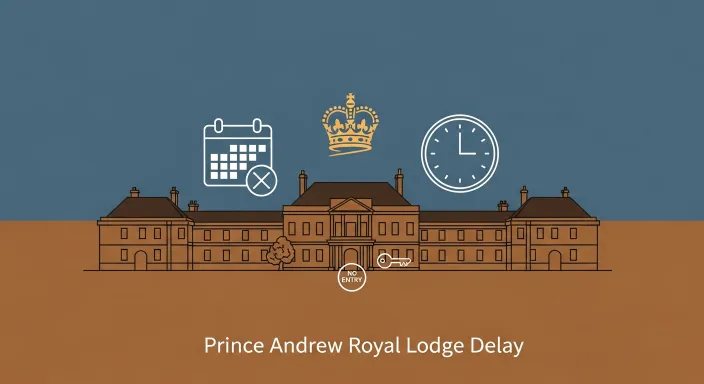
Prince Andrew Royal Lodge Delay refers to the prolonged situation surrounding his continued stay at Royal Lodge in Windsor Great Park and the pause around relocation expectations. The issue centers on timing, finances, lease terms, and internal royal property management rather than sudden action. Discussion grew as decisions appeared slower than anticipated, creating questions about responsibility, maintenance costs, and future use of the estate.
The delay highlights how royal residences operate under structured agreements, layered oversight, and long-term planning rather than rapid change.
Royal Lodge and Its Place Within the Estate
Royal Lodge sits within Windsor Great Park and carries historic value alongside practical residential use. The property operates under a long lease arrangement that outlines upkeep duties, renovation standards, and occupancy terms.
Characteristics of Royal Lodge
- Large grounds requiring constant care
- Heritage features protected by strict rules
- High annual maintenance costs
- Long-term lease conditions
These elements shape every decision connected to residence changes.
Nature of the Delay
The delay does not signal inaction. It reflects negotiation, review, and procedural steps tied to estate management. Any shift requires alignment between lease obligations, funding sources, and future planning for the wider estate.
Contributing factors
- Review of lease responsibilities
- Discussions around funding for upkeep
- Assessment of alternative residences
- Estate-wide housing priorities
Each factor slows rapid resolution.
Financial Responsibilities and Ongoing Costs
Royal Lodge carries substantial annual expenses. Heating, staffing, repairs, and groundskeeping demand steady funding. Lease terms place responsibility for many of these costs on the occupant rather than the Crown Estate.
Major cost areas
- Structural maintenance
- Utilities and heating
- Staff accommodation
- Grounds and security
Delays arise while confirming how these obligations will meet future standards.
Lease Terms and Legal Structure
The residence operates under a long-term lease rather than direct ownership. This structure grants occupancy rights while enforcing strict conditions. Any change requires compliance with those terms.
Lease components
- Duration extending across decades
- Maintenance standards defined in detail
- Limits on subletting or alteration
- Conditions for early exit
These clauses limit quick transitions.
Why Timing Matters
Timing affects estate planning across Windsor Great Park. Other residences, staffing needs, and refurbishment schedules depend on coordinated movement rather than isolated decisions.
Timing considerations involve
- Availability of alternate housing
- Renovation schedules elsewhere
- Budget cycles
- Staffing redistribution
Alignment across these areas prevents disruption.
Public Interest and Media Pressure
Public attention intensified scrutiny. Coverage focused on fairness, funding, and optics. Media discussion, however, does not override contractual or procedural steps.
Most discussion centered on
- Use of estate resources
- Comparison with other royal residences
- Questions around accountability
Official decisions follow process rather than commentary.
Internal Royal Property Management
Royal residences fall under coordinated management rather than individual preference. Advisors, estate managers, and legal teams guide outcomes.
Their responsibilities involve
- Protecting heritage assets
- Managing budgets responsibly
- Maintaining long-term planning
- Reducing unnecessary disruption
This structure explains measured pacing.
Alternatives Considered
Alternate residences within the royal property portfolio require readiness before occupancy. Not all properties suit immediate relocation due to size, security, or condition.
Considerations for alternatives
- Suitability for long-term living
- Security requirements
- Refurbishment needs
- Operating costs
Evaluation adds time.
Maintenance Standards and Heritage Rules
Royal Lodge falls under heritage oversight. Repairs and alterations follow strict guidelines to protect historical features.
Standards require
- Approved materials
- Specialist craftsmanship
- Scheduled inspections
Such requirements slow transitions but preserve value.
Timeline Overview of the Delay
| Focus | Outcome | |
| Initial review | Lease and cost assessment | No immediate move |
| Internal talks | Funding and upkeep | Extended discussions |
| Estate planning | Housing alignment | Deferred decision |
| Public attention | Media focus | No procedural change |
| Current status | Ongoing evaluation | Delay remains |
This outline shows progression rather than stagnation.
Security and Staffing Factors
Residences tied to royal security involve trained teams and infrastructure. Moving locations requires reconfiguration rather than simple transfer.
Security-related factors
- Guard deployment
- Surveillance systems
- Secure access points
Preparation demands coordination and time.
Financial Optics and Accountability
Public funding sensitivity shapes decision-making. Even private lease arrangements receive scrutiny due to association with royal assets.
Financial optics comprise
- Transparency expectations
- Clear division of private versus public cost
- Long-term sustainability
Clarity protects institutional credibility.
Comparison With Other Royal Moves
Other royal relocations followed similar measured timelines. Property readiness and funding alignment shaped outcomes rather than urgency.
Recurring patterns observed
- Advance refurbishment
- Gradual relocation
- Formal announcements after completion
This approach reduces disruption.
Emotional and Personal Dimensions
Residences carry personal history. Transition decisions involve more than logistics. Emotional attachment can influence pace, though formal processes guide outcomes.
Personal aspects
- Length of residence
- Family association
- Lifestyle adjustment
These factors coexist with formal review.
Estate-Wide Priorities
Windsor Great Park serves multiple functions: residential, ceremonial, and public access. Property decisions consider the full estate rather than single occupants.
Estate priorities
- Long-term preservation
- Balanced residential use
- Financial sustainability
Individual cases fit within this broader framework.
Lessons From the Delay
The situation shows how structured property systems operate within royal estates. Contracts, heritage rules, and financial planning outweigh immediate pressure.
Broader Learning
- Lease terms shape outcomes
- Heritage protection slows change
- Estate planning guides timing
These lessons explain measured action.
Present Position
The delay remains tied to review rather than indecision. Discussions continue around responsibilities, costs, and future planning without abrupt change.
Existing Indicators
- Occupancy unchanged
- Evaluation ongoing
- No finalized relocation schedule
Stability persists during review.
In reality, the Prince Andrew Royal Lodge Delay reflects structured property management rather than hesitation. Lease conditions, heritage obligations, financial review, and estate-wide planning guide the pace. The situation underlines how royal residences operate through process, balance, and long-term consideration rather than rapid response.